Overview
A partnership with four names and no shared language.
Business Tornio brought together Lappia Vocational College, Lapland University of Applied Sciences, and the University of Lapland in a joint effort to boost product and service development for companies in Tornio's industrial area.
I worked alongside Anastasiya Mogilevskaya as strategist and Eunice Su-Ai Lim as UX researcher. I led the UI design and built the prototype shown throughout this page, while the three of us shaped the research and strategy together.
A note on credit. Research and strategic framing on this project were a genuine team effort with Anastasiya Mogilevskaya and Eunice Su-Ai Lim. The UI design and prototype build shown here were mine.
Research
The complexity wasn't in any one institution. It was in the space between them.
Early interviews pointed to friction that had nothing to do with the actual product development work, and everything to do with coordinating four organisations that had never needed a shared process before.
01
The complexity of collaboration made precise time estimation genuinely difficult for everyone involved.
02
A multi-university partnership carries inherent structural complexity that no single institution could resolve alone.
03
The timeline needed real flexibility and adaptability built in, not bolted on after the fact.
04
A communication gap among the three participating colleges was actively hindering collaboration during the design process itself.
The Workshop
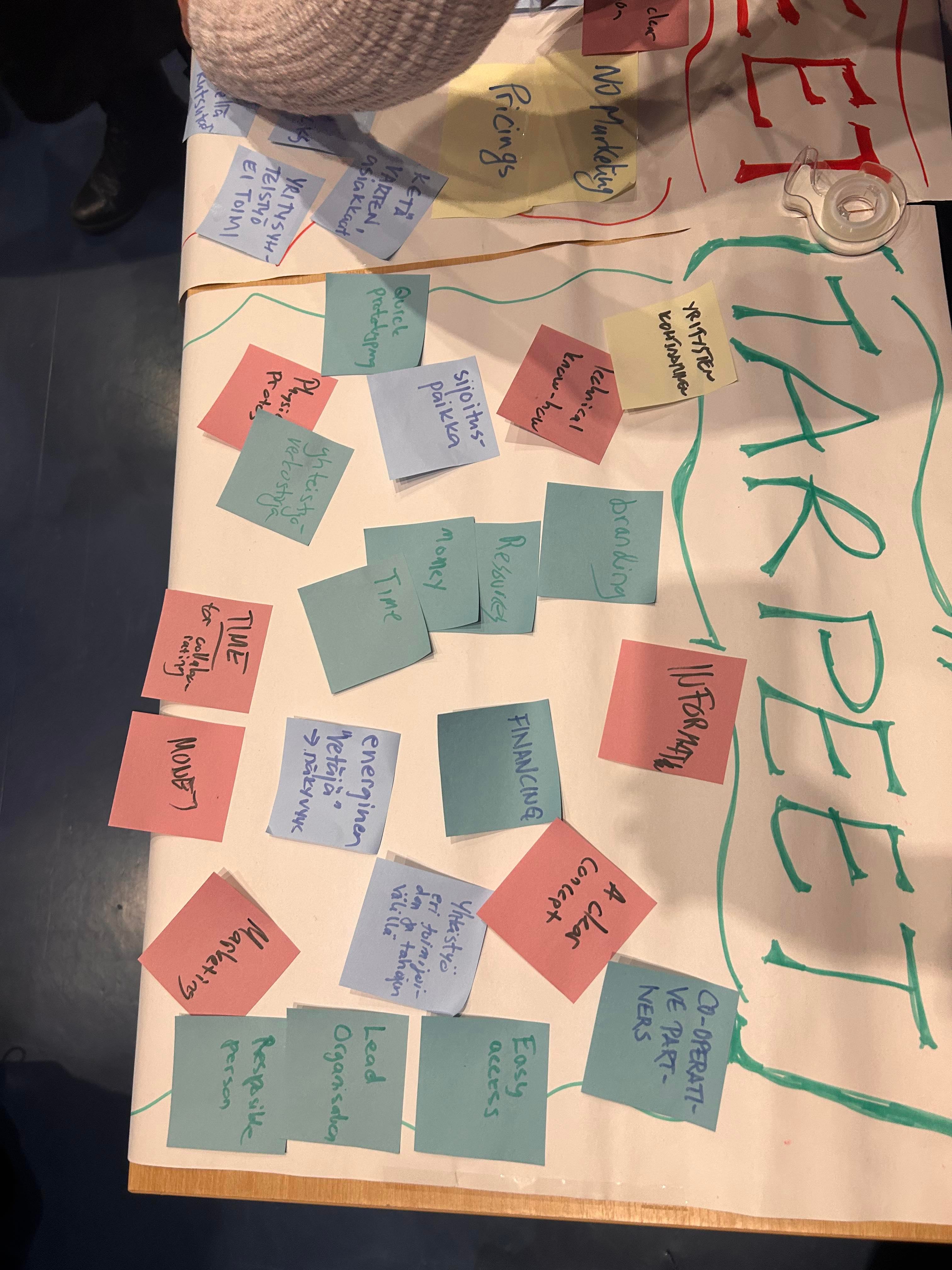
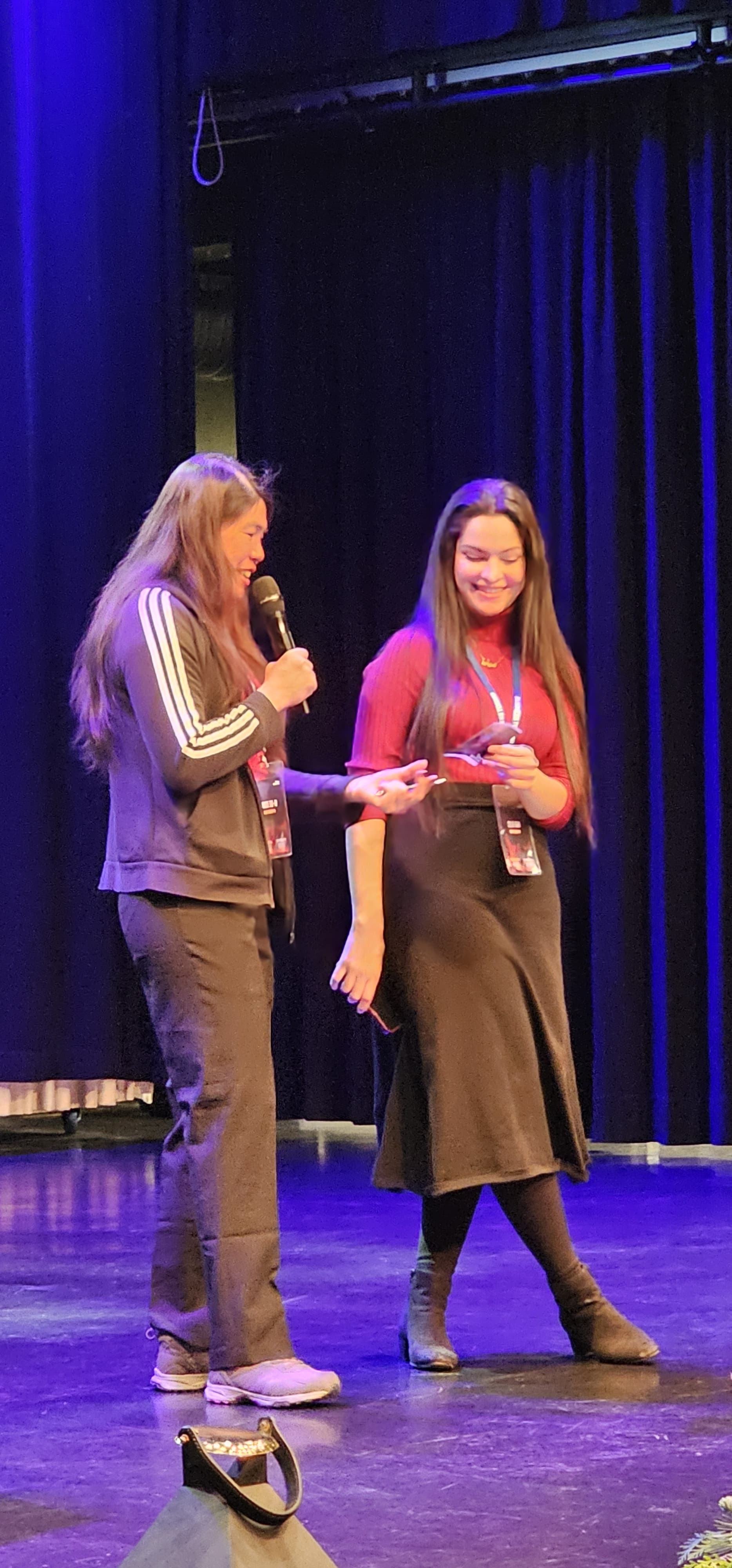
Eighteen people, ninety minutes, and a card sort that told us the real problem.
The workshop moved through a project overview, a quantitative survey, and a card sorting exercise to surface what people actually needed, before closing with a presentation of the strongest ideas generated on the spot.
90
minutes, start to finish
4
institutions represented
3
structured exercises run
What the room actually told us
Clear concept: most participants found the project genuinely confusing, with no accessible information to understand it better
Project management: the initiative needed better management or a clear lead organisation
Marketing: despite wanting to reach SMEs directly, there was no social presence or platform to actually reach them
Mapping the Journey
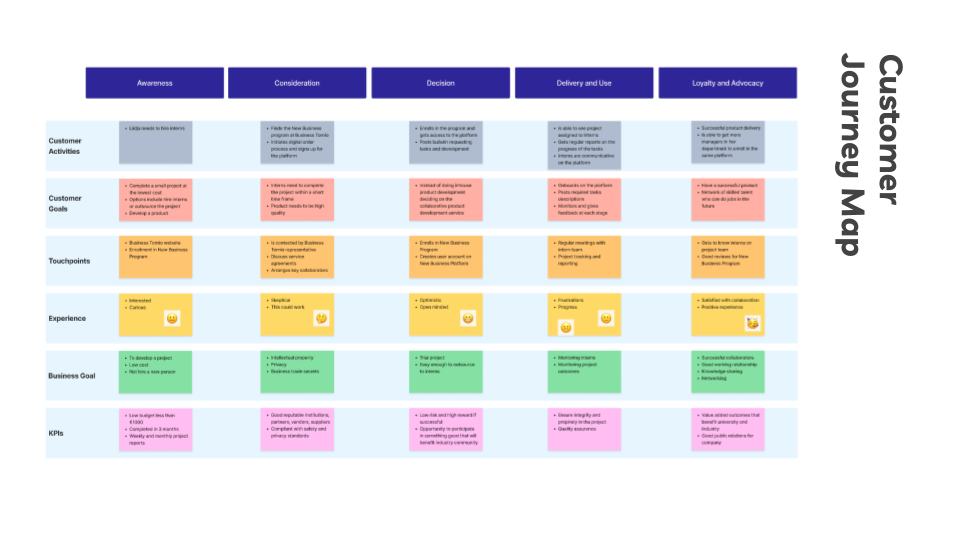
From first awareness to advocacy, five stages, four perspectives each time.
The customer journey map tracked actions, goals, touchpoints, experience, business goals, and KPIs across five stages, from initial awareness through loyalty and advocacy. It became the shared reference point that the three institutions had been missing.
How Might We
Create an effective service model of collaboration between universities in Lapland and the Tornio industrial business community?
Solution
Two challenges, two direct responses, one platform.
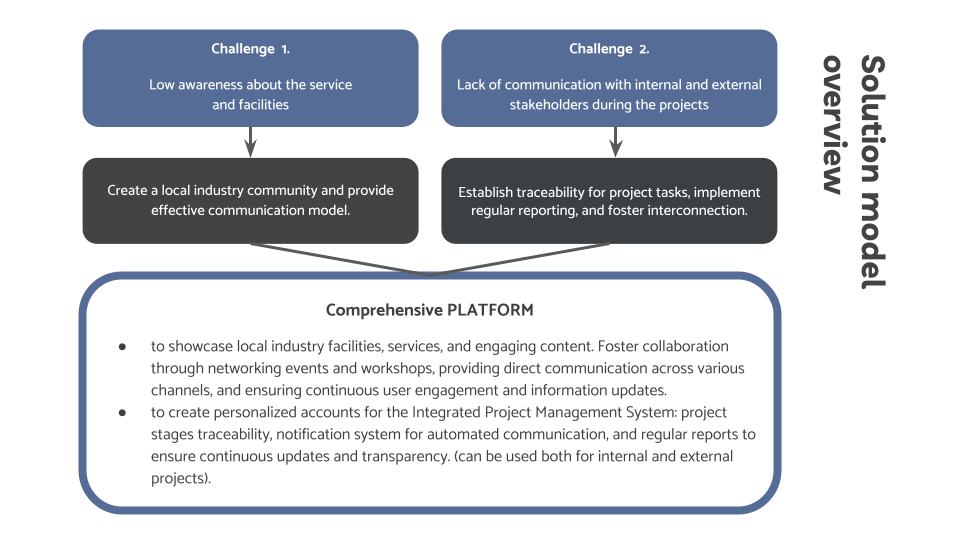
Rather than treating "low awareness" and "lack of communication" as one fuzzy problem, the solution model split them into two distinct challenges and answered each on its own terms before merging into a single comprehensive platform.
The first challenge, low awareness of the service and facilities, was answered by building a local industry community with an effective communication model behind it. The second, a lack of communication with internal and external stakeholders, was answered by establishing traceability for every project task with regular reporting built in.
A communication model with no missing link
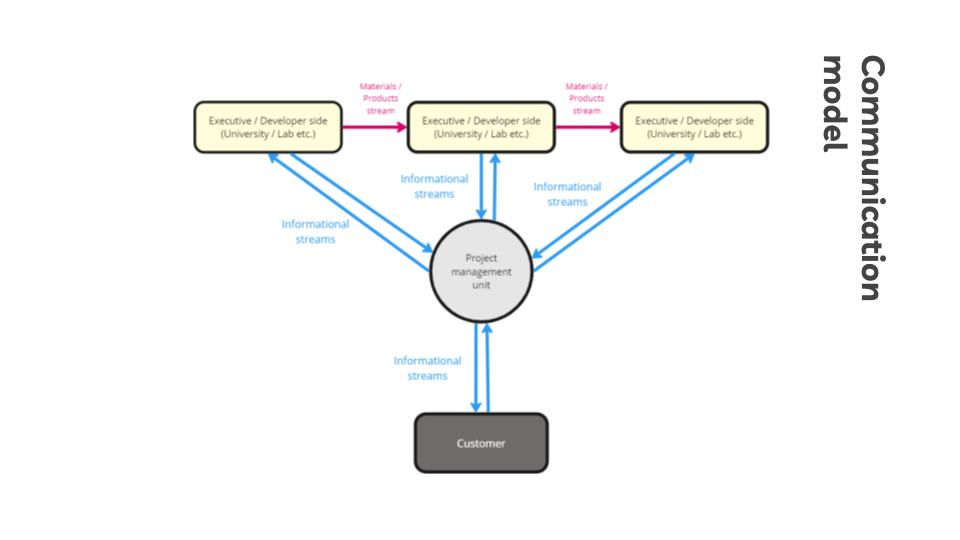
The diagram below was designed specifically to close the communication gap participants named. Every executive or developer side now routes through a shared project management unit before reaching the customer, so no institution is ever coordinating in isolation.
The Prototype
A platform that does double duty: business development and customer onboarding.
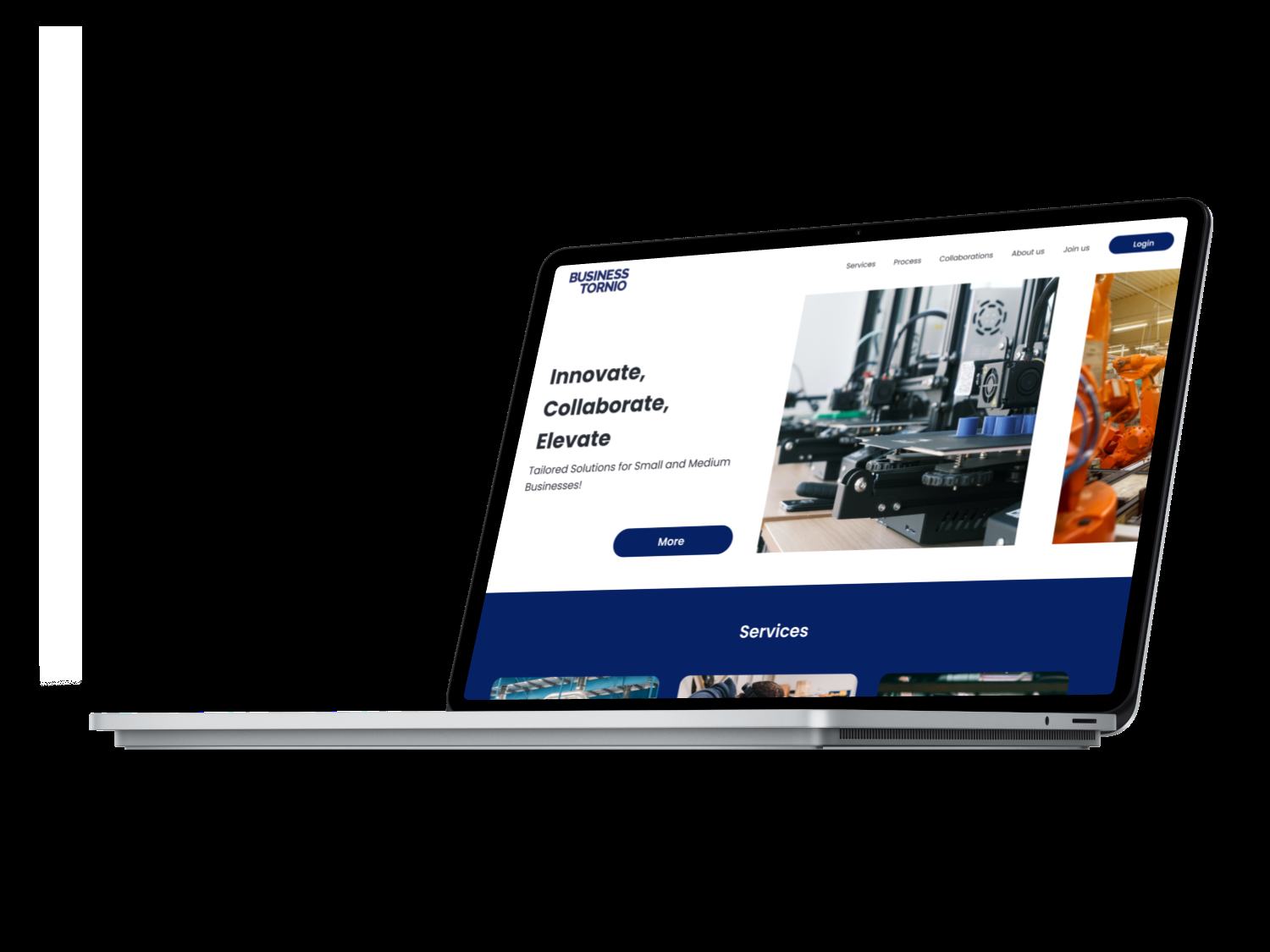
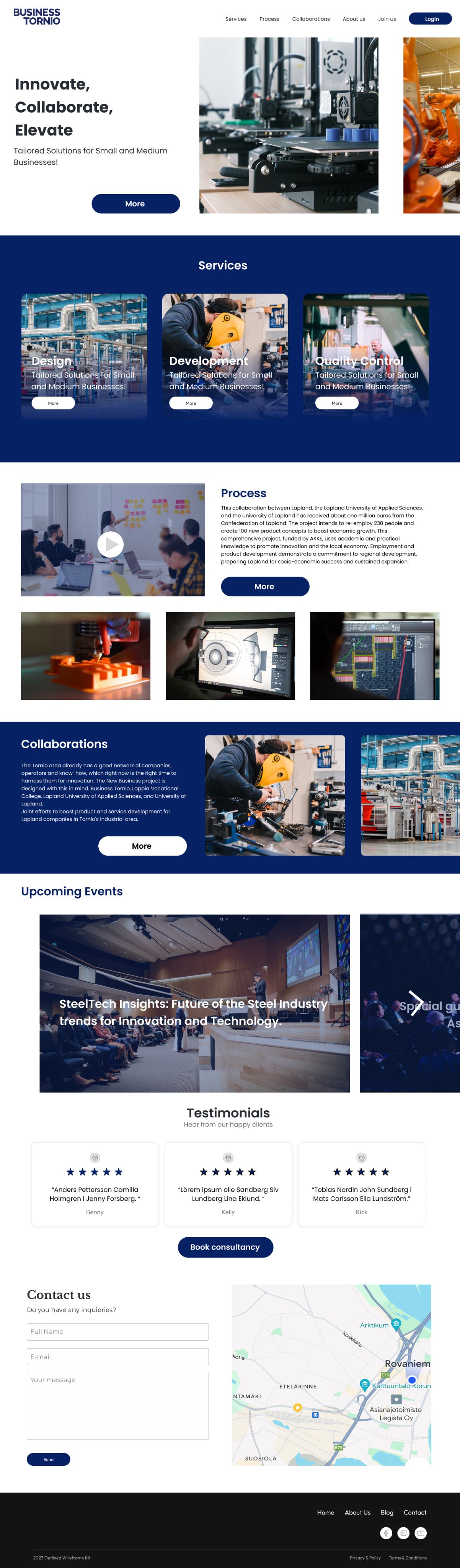
I designed the prototype to integrate as an extension of the existing Business Tornio website rather than compete with it, built around two goals at once: streamlining how the business runs internally, and improving how a new customer experiences walking in the door.
- Clear services overview, presented without jargon
- Consultation booking system built directly into the flow
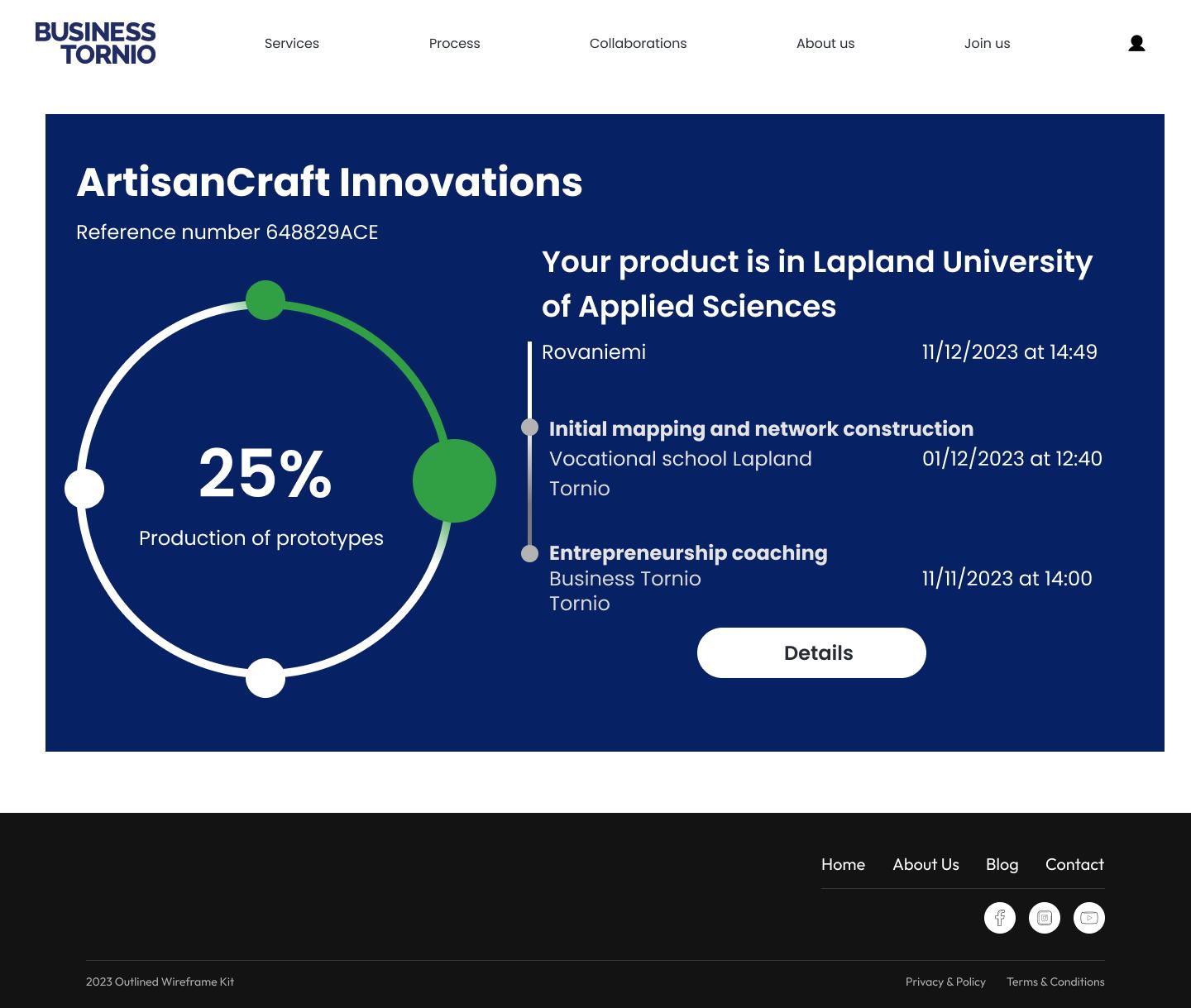
- Order tracking with real-time development updates
- Detailed development reports for ongoing transparency
- Upcoming events section to keep the community active
- User feedback section closing the loop after delivery
- Social media integration to solve the awareness gap directly
- A built-in project management tool for internal coordination
Brand foundations
A simple, confident system: navy and black on white, Poppins throughout for consistency across every touchpoint.
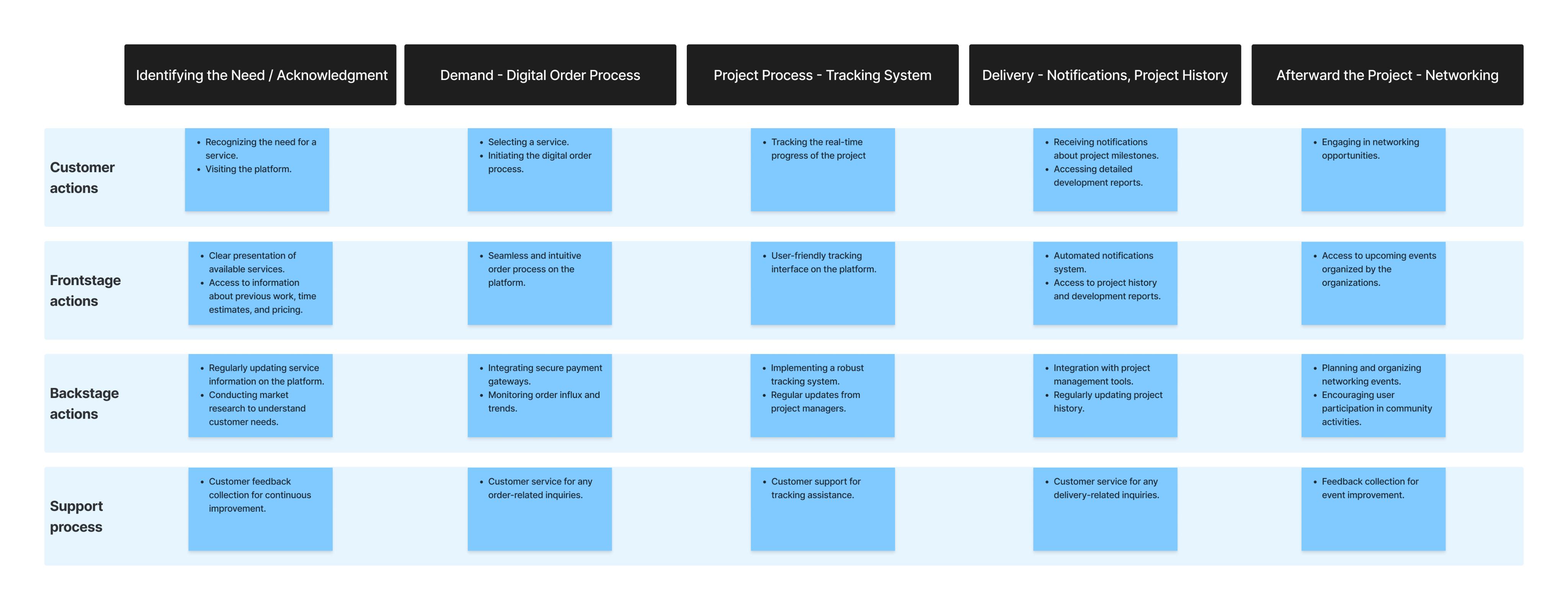
Service Blueprint
Five stages, four layers each, nothing left implicit.
The blueprint traces customer actions against frontstage, backstage, and support processes across five stages, from identifying the need through networking after the project ends. Every backstage action, like integrating secure payment gateways or maintaining project history, has a visible reason rooted in something a real participant said.
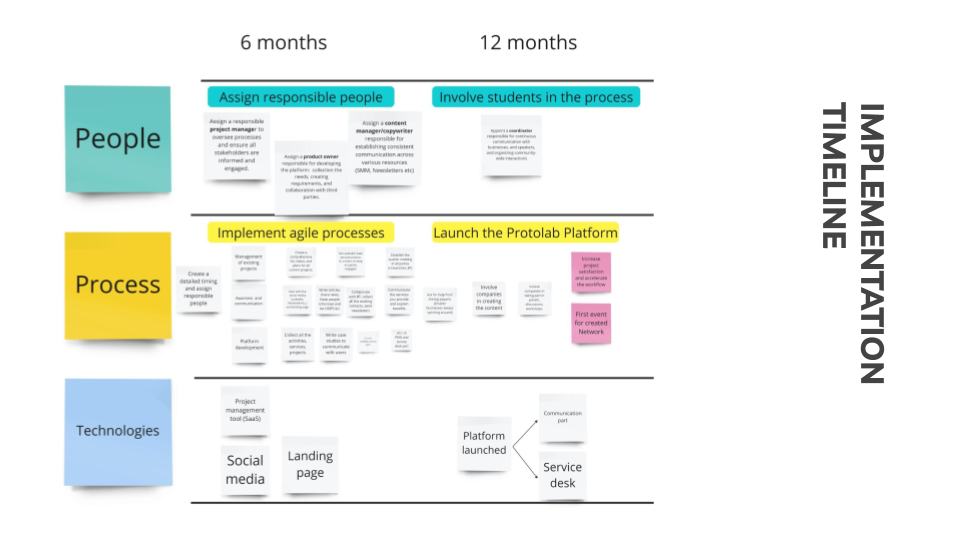
Implementation
A roadmap, not just a wish list.
The strategy split into people, process, and technology across two horizons. At six months: assign a responsible project manager, implement agile processes, and stand up the core project management tooling. At twelve months: involve students directly in the process and launch the ProtoLab platform itself, with a communication port and service desk ready on day one.
Reflection
The platform was the easy part.
"Eighteen people in a room for ninety minutes told us more about why this partnership was struggling than any of the original project documentation had. The hard part was building something that could carry four institutions' worth of accountability without becoming four institutions' worth of bureaucracy."
What stays with me from this project is how often the actual blocker wasn't capability or ambition, it was that nobody had built a structure for the four parties to talk to each other consistently. The solution model, the communication diagram, and the service blueprint all exist to answer that one quiet problem, not to add more features for their own sake.